
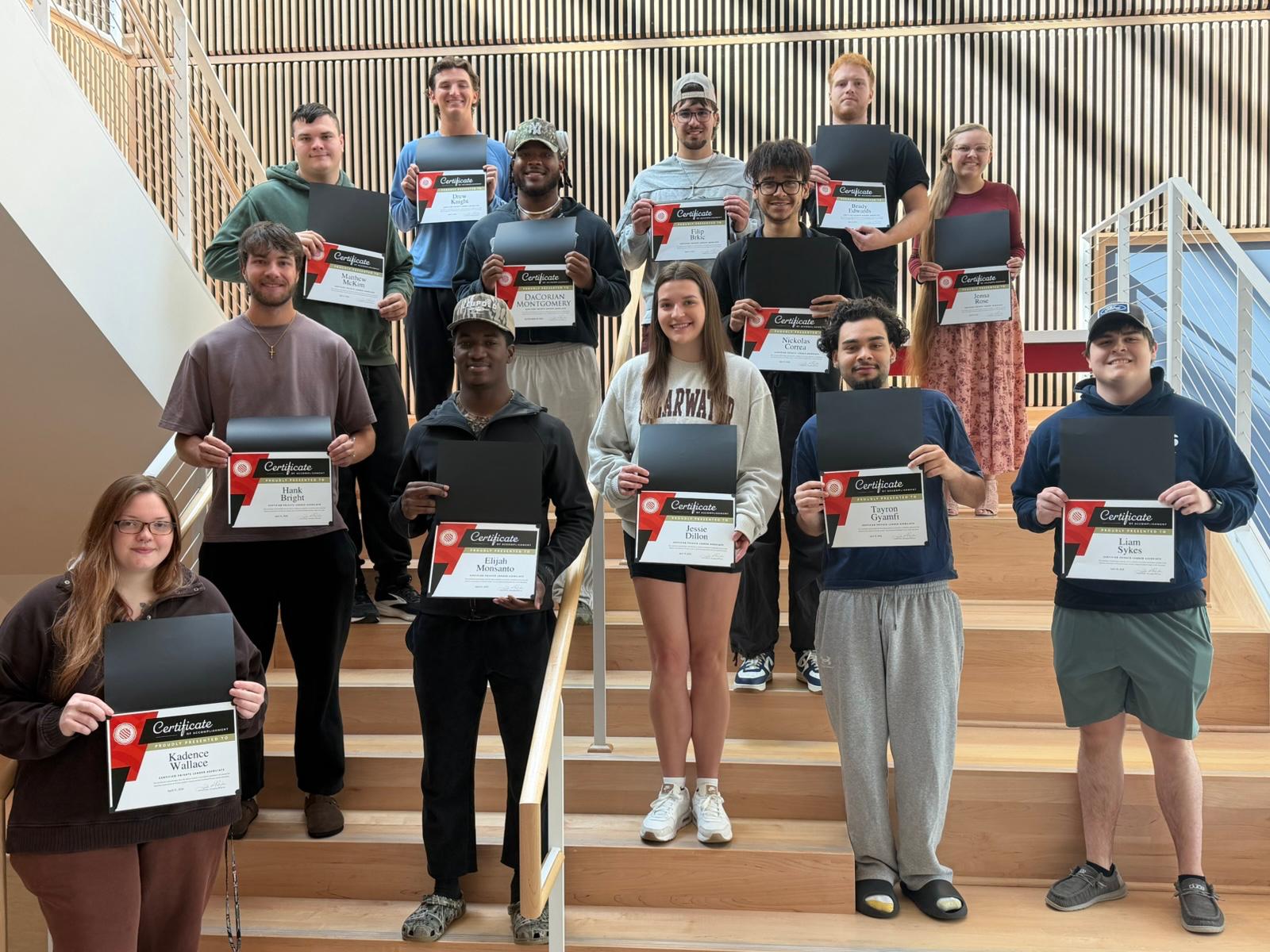
When a University of Virginia professor built AAPL’s CPLA certification into his curriculum, his students responded by treating it less like coursework and more like the real thing.
Private lending has spent decades occupying an awkward space in the public imagination. To outsiders, it’s flattened into caricature: hard-money cowboys, opportunistic capital, transactional chaos, guys named Rick arguing over cracked drywall in a self-storage facility next to a mattress outlet. Finance, but with more dust.
Meanwhile, in the real world, billions of dollars in residential and transitional real estate projects are funded every year through private lenders operating sophisticated underwriting models, layered risk analysis, relationship-driven origination channels, and institution-grade operational standards.
An entire ecosystem has matured in plain sight while much of higher education continued teaching real estate finance as if every viable loan begins and ends at a traditional bank.
That gap is finally narrowing.
How a Professor Became a Believer
This spring, students at the University of Virginia completed the Certified Private Lender Associate (CPLA) course through the American Association of Private Lenders, marking a meaningful moment for both the association and the broader private lending industry. For the first time, students from one of the country’s most respected academic institutions are entering the workforce already viewing private lending as a legitimate, intellectually rigorous career path rather than a niche adjacent to “real finance.”
Universities like UVA do not casually insert industry credentialing into flagship coursework: Academic real estate is brutally competitive, and every course hour fights for oxygen. Faculty are expected to justify not merely educational value, but professional credibility, market relevance, and long-term applicability.
For Assistant Professor Marcos Medeiros, the path into private lending started the way many meaningful discoveries in this industry begin: through actual deals.
“I was first exposed to private lending about four years ago through my own real estate investments,” Medeiros explained. “That was what caught my attention. … It was real deals, real properties, real risk, and real capital.”
Medeiros realized private lending occupied a strange blind spot inside traditional finance education despite being central to how enormous portions of real estate investment activity function.
“What surprised me was how important private lending is for real estate investors, especially when traditional banks are too slow or simply do not fit the deal,” he said. “I started thinking, ‘Why are we not teaching this more?’”
The answer, in part, is inertia. Academia tends to move carefully, especially in finance disciplines where institutional reputation rides on intellectual seriousness and professional legitimacy. Private lending, despite its scale and sophistication, lacks the kind of structured career pathways universities instinctively trust. It’s lucky that Medeiros’ path to academia was also a bit nonlinear.
“My background is a little different because I had a long career in industry before becoming a professor,” Medeiros said. “So, I always try to connect classroom learning with real-world application. Students can access information very easily. What they need from us is context, experience, and application. Private lending brings all of that into the classroom.”
What Happened in the Classroom
Before bringing the certification into his curriculum, Medeiros completed the course himself. While the technical content stood out, its applicability is what made Medeiros decide the course needed a place in his curriculum.
“When I took the CPLA course, I liked how practical it was,” he said. “That is exactly the kind of content students need. It helps them connect finance theory to something they can see and understand.”
That contrast became even more evident as students progressed through the course. They wanted to use CPLA’s principles to evaluate actual properties, discuss real transactions, and work through the layered decision-making process.
“In one deal, students have to think about the property, the borrower, the numbers, the market, the risk, and the exit strategy,” Medeiros said. “They are asking, ‘Would I lend on this deal?’ or ‘Would I invest in this property?’”
Perhaps the most striking discovery was how naturally students gravitated toward the material. Medeiros noted that several were already thinking seriously about investing, entrepreneurship, and wealth-building while still in school.
“Many of them want to learn how to invest and build wealth now, not years from now,” he said. “When I started seeing students ask about buying investment properties, analyzing deals, and getting into real estate, I realized they needed this exposure earlier. Some of them are already taking steps toward their first investment property, which is exciting. I wanted them to have the right vocabulary and tools before jumping in.”
For their final projects, students underwrote real deals. Medeiros expected solid academic work; what he encountered looked like professional analysis.
“Some projects felt less like classroom assignments and more like real investment conversations,” he said.
That sentence may ultimately be the clearest signal of where the industry is headed.
A New Talent Pipeline
Private lending recruitment relies on career migration. Mortgage professionals, real estate operators, brokers, finance graduates, entrepreneurs, and accidental deal junkies eventually found their way into the business through fragmented exposure and industry networking. What UVA represents is fundamental change to the talent pipeline: students intentionally entering adulthood already fluent in the vocabulary, mechanics, and analytical framework of private lending.
It also highlights AAPL’s evolving role within the industry. Trade associations often talk about education. Far fewer create educational standards capable of surviving academic scrutiny from a university environment that has little interest in promotional fluff or industry self-congratulation. UVA’s adoption of CPLA effectively validates that the curriculum is something durable: professional education with institutional credibility.
Medeiros sees broader implications beyond any single career path.
“Not every student will go into private lending,” he said. “But all of them benefit from understanding how capital, risk, and real estate connect.”
The industry has spent years insisting it deserves serious recognition. Now, students at UVA are building careers on the assumption it already has it.






Hi Kat! Great article! It is encouraging that students WANT to become private lenders and NOT just for a grade or academic exercise! Well written and thanks for the kudos to Professor Medeiros leading the charge of the students! Now, let’s get some other universities and colleges to sign up!